Pica
Pica is an abnormal behavior of ingesting non-food items. Pica is a sign that can be associated with a variety of different medical conditions; any condition that causes malnutrition, electrolyte imbalance, gastrointestinal (GI) disturbances, polyphagia, or CNS disorders can cause pica.
Affected Systems
Pica may cause foreign body obstruction of the gastrointestinal tract;
Gastrointestinal discomfort leading to vomiting and diarrhea;
Increases the chance of gastrointestinal parasites.
Portraits
Animal Species
Pica occurs in dogs and cats.
Breed Preferences
Oriental cat breeds, such as Siamese cats, may be at greater risk for pica.
Average Age
Pica is more common in puppies than in adult dogs. Pica in cats is most likely to begin before 18 months of age.
History
In dogs, ingestion of inappropriate objects such as rocks, clothing, and/or feces.
In cats, ingestion of fabric, plastic, shoelaces, string, thread, or other inappropriate objects
Physical examination
- Dental trauma if the dog targets a hard object.
- Pallor or weakness if anemia is the cause.
- Poor physical condition if malabsorption or maldigestion is a contributing factor.
- Neurological signs (if caused by a neurological disorder).
- Abdominal palpation may be abnormal if gastroenteritis or foreign body.
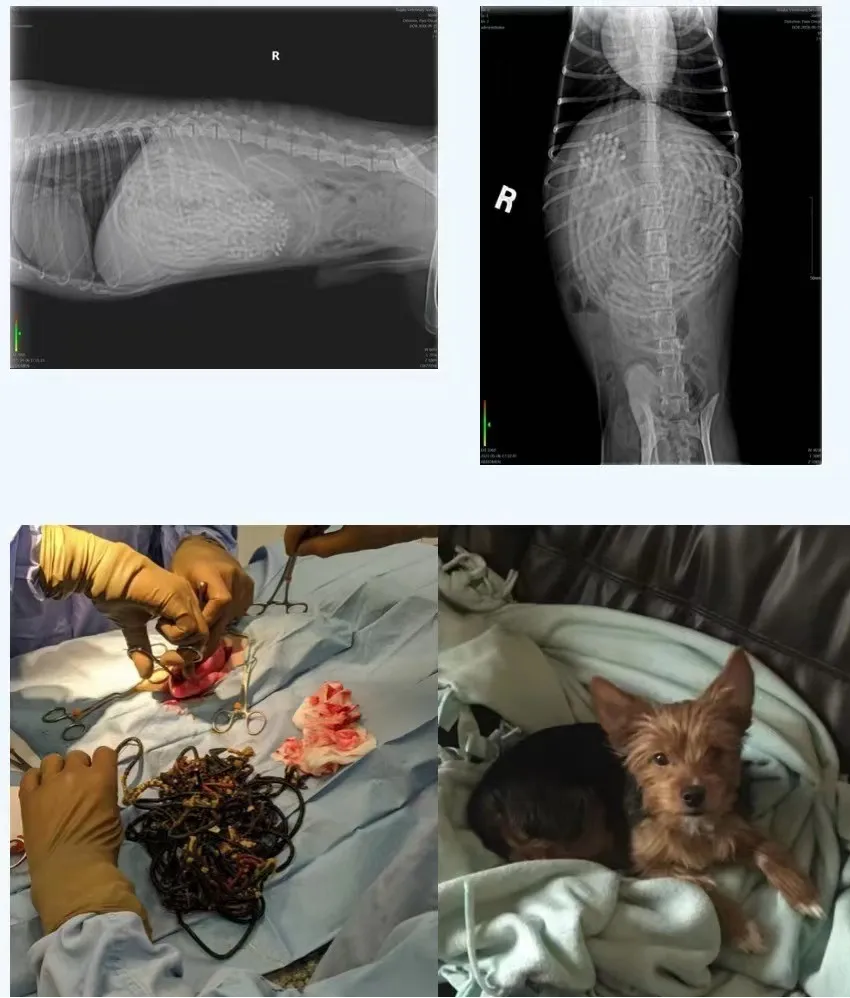
Figure: The dog was admitted to the hospital with abdominal distension and vomiting. More than 60 hair bands were removed from the stomach during the operation.
Behavioral Causes
- Pica may be secondary to theft when the dog is highly motivated to prevent the owner from retrieving the "stolen" item or the item has a dietary appeal
- Pica may be the result of anxiety or frustration, leading to the destruction and subsequent ingestion of the item.
Disease Causes
- Anemia.
- Malnutrition leading to polyphagia.
- Endocrine disease - hyperthyroidism, diabetes, hypercortisolism.
- Maladigestion/malabsorption (eg, exocrine pancreatic insufficiency)
- Chronic enteropathy, inflammatory bowel disease, small intestinal bacterial overgrowth • Central nervous system disease.
- Portal shunts.
- Intestinal parasites.
Risk Factors
- Early weaning of kittens is hypothesized to result in sucking and ingestion of fabrics.
- Cats fed a low roughage diet and/or not allowed access to roughage sources such as grass.
- Dogs that lack an appropriately stimulating environment, adequate activity, or social interaction may be at risk for pica.
Identification Behavioral History and Description:
- Description of the problem – when and where it occurred.
- Age of onset.
- Owner’s usual response, any corrective measures attempted to date, and their results. Changes in household, schedule, diet, or health associated with onset of the problem.
- Pet’s feeding routine – when, where, and by whom.
- Other behavioral issues.
- House training status – when and where the pet was given up.
- How the pet was house trained.
- Relationships with other pets
Diagnosis
- Environment Daily schedule including play, exercise, attention, or training. Medical health conditions should be evaluated
- Destructive chewing Pica must be distinguished from destructive chewing, in which items may be torn apart but not eaten. Pica must also be distinguished from situations in which an animal consumes non-food items because the food smells and/or tastes tempting.
Abnormalities:
- Results suggest diabetes, hypercortisolism, hyperthyroidism, or drug-induced polyphagia.
- Anemia or hypoproteinemia.
- Results suggest portal shunts - microcytosis, hypoalbuminemia, low blood urea nitrogen (BUN), biuretium crystalluria, etc.
- Peripheral eosinophilia may be due to gastrointestinal parasites or eosinophilic inflammatory bowel disease.
Imaging
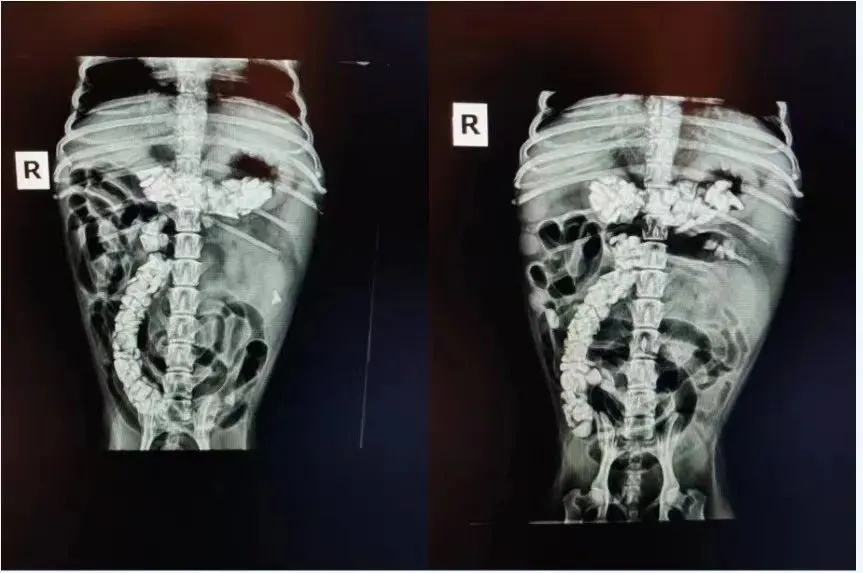
Perform abdominal x-rays and/or abdominal ultrasound to exclude foreign body obstruction. Small livers may also be present if portal shunts are present.
Invasive Diagnosis
- Gastroenteroscopy and biopsy to evaluate gastric and small intestinal disease.
- Culture (if needed) to evaluate small intestinal bacterial overgrowth.
Treatment of Pica
- Place a basket muzzle on the pet. Prevent access to non-food items that could be targets—use physical barriers to block or limit the animal’s access to target non-food items
- Change to a high-fiber diet. Feed a prescription diet.
- Provide feeding toys and acceptable foraging opportunities (e.g., provide greenery such as grass or catnip for cats).