Feline Panleukopenia
Feline panleukopenia is an infectious disease caused by feline parvovirus (FPV) infection, characterized by high fever, vomiting, severe leukopenia and enteritis. It mainly infects a variety of animals in the cat and mustelid families. This disease is also called feline distemper.
FPV was first reported and isolated by Harranon and Ender in 1930. It now occurs and is distributed all over the world. In 1984, my country isolated a strain of FPV from a natural case for the first time.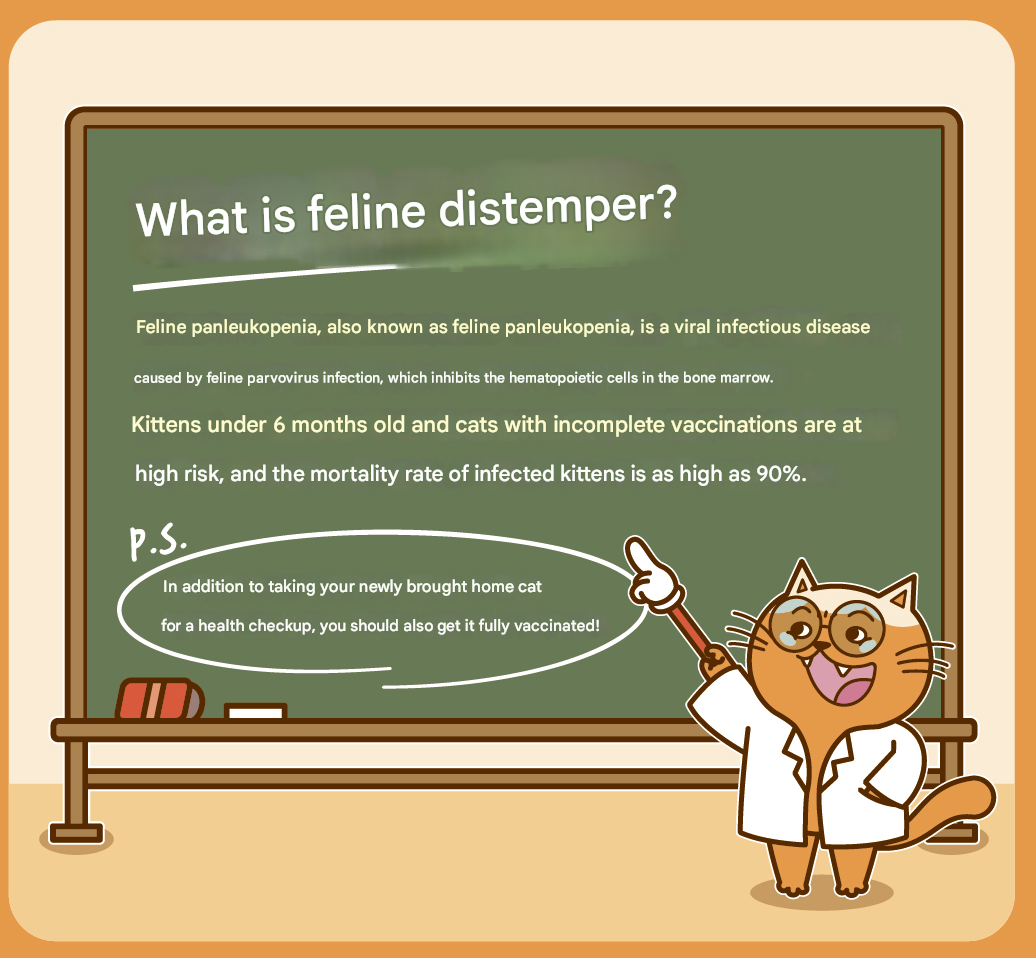
FPV is a member of the Parvoviridae family. Its virus particles are round and it is a single-stranded linear DNA virus. It is very similar to canine parvovirus (CPV) and mink enteritis virus in morphology and antigenicity. Most people believe that FPV is the ancestor of CPV, and the current CPV strain can also infect cats. FPV has an agglutinating effect on pig and monkey cells at 4°C. FPV can proliferate in the kidneys, lungs, testicles, spleen, heart, diaphragm, lymph nodes, etc. of kittens, as well as in the tissue cells of minks and ferrets. The lesions produced by the cells are not easy to observe and need to be examined by staining microscopy. The nucleoli of the cells are swollen and surrounded by a clear halo. Intranuclear inclusions appear in some cells.
FPV-infected hosts include domestic and wild cats, some raccoons, mustelids, and civets, among which kittens and unvaccinated cats are the most susceptible.
After FPV infection, viral particles can be excreted from secretions and excretions for weeks to months. The virus in tissue fragments is very stable in the environment and can remain infectious for more than 1 year at room temperature. The virus is resistant to quaternary amines, iodine tincture, and indigo disinfectants, but can be inactivated by 4% formalin, 1% glutaraldehyde, or 1:32 diluted bleach.
Because pet cats can obtain good immunity, the animals threatened by infection are mainly wild cats, non-domesticated cats, and unvaccinated cats.
FPV is highly contagious, with an incubation period of 2 to 9 days.
The clinical symptoms of FPV infection vary depending on the age and immune status of the cat at the time of infection.
Infection in pregnant cats can cause miscarriage, stillbirth, and other reproductive disorders. If the fetus survives, it usually has brain dysplasia and/or retinal abnormalities.
The same clinical manifestations can occur in kittens 3 to 4 weeks old after birth, while older kittens show typical symptoms of gastroenteritis and systemic infection.
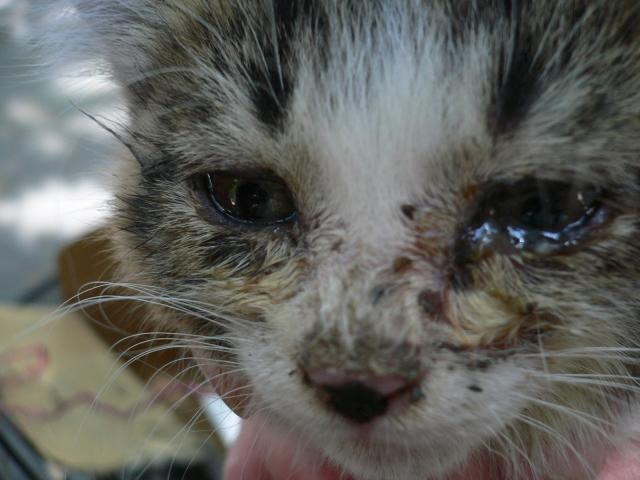
▼Feline panleukopenia symptoms: discharge from eyes and nose
Very acute FPV infection is short-term and acute, often causing death within 24 hours of infection due to secondary bacteremia and endotoxemia, accompanied by small intestinal damage and panleukopenia. Symptoms include abdominal pain, severe depression, and hypothermia. Due to the rapid progression of the disease, typical gastrointestinal symptoms may not be seen, and these animals can usually be diagnosed retrospectively through histopathological examination.
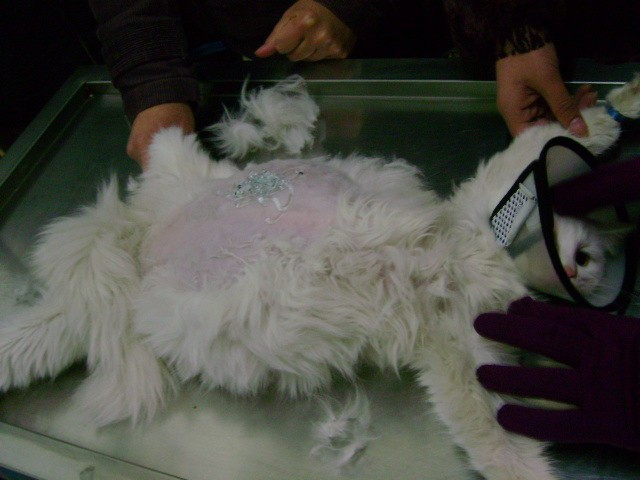
▼Case of feline panleukopenia: a large amount of ascites accumulates in the abdominal cavity
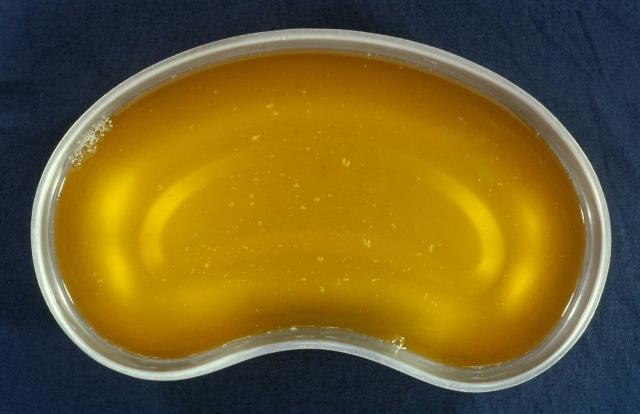
▼Case of feline panleukopenia-discharged ascites
Typical symptoms of acute FPV infection include dehydration, vomiting, abdominal pain, hemorrhagic enteritis and fever. In severe epidemics, almost all kittens die. Cats with a course of illness of more than 6 days may recover after a longer recovery period.
▼Feline panleukopenia symptoms: severe dehydration
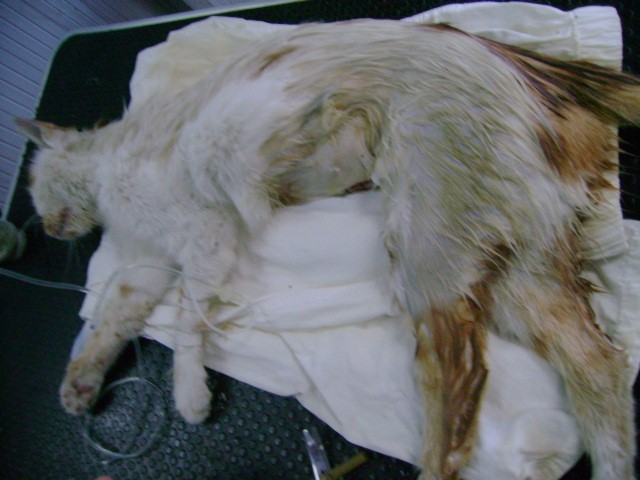
Except for cats with very acute disease, dehydration and emaciation can be seen in autopsy; local congestion of the jejunum and ileum, splenomegaly, edema and necrosis of mesenteric lymph nodes.
In most cases, the red pulp of long bones becomes liquid or semi-liquid, which has a certain diagnostic value.
During histological examination, eosinophilic and basophilic inclusion bodies can be seen in the intestinal epithelial cells, but they often disappear if the course of the disease exceeds 3~4 days.
A preliminary diagnosis can be made based on epidemiology, medical history, typical clinical symptoms, such as biphasic fever, massive leukopenia, and pathological changes. Confirmation depends on virus isolation or serological tests. Currently, FPV rapid diagnostic kits are available on the market.
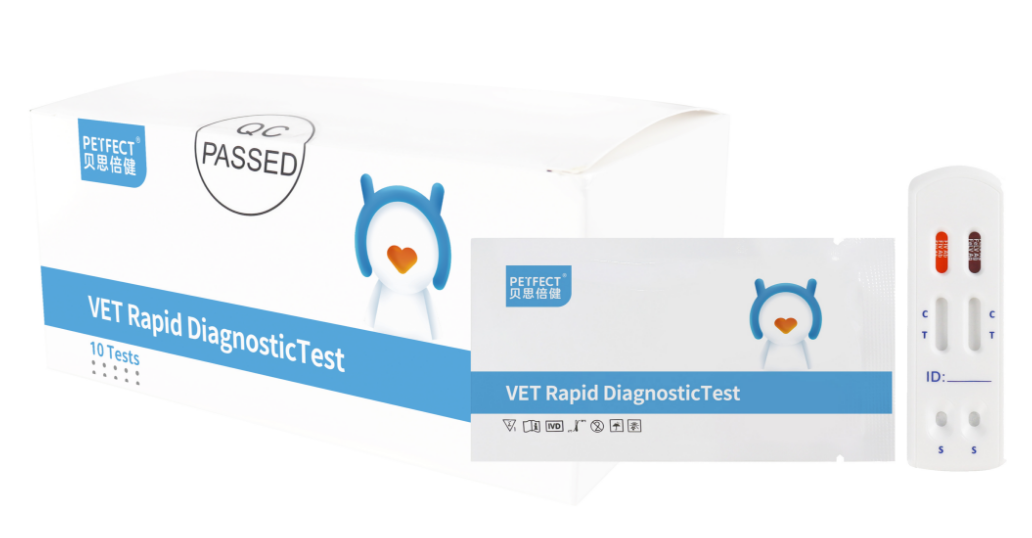
Note: This product uses rapid immunochromatographic technology to detect feline panleukopenia viru s antigen. After adding the diluted sample to the sample well of the test strip card, if there is FPV antigen in the sample, the antigen will specifically bind to the anti-FPV monoclonal antibody labeled with colloidal gold, forming a complex that moves along the chromatographic membrane and is captured by the pre-coated FPV monoclonal antibody on the chromatographic membrane, forming a burgundy detection line at the T position of the card. If there is no FPV antigen in the sample, no visible line will be formed at the T position. In addition, a C line is also designed in the system to verify the validity of the experiment. Regardless of negative or positive results, this line should be colored, otherwise it will be judged as an invalid result.
Since healthy cats can also excrete FPV or CPV viruses from their feces, it is not possible to determine the occurrence of this disease by observing virus particles only through electron microscopy. Therefore, it is best to use organs or blood from acute cases as inocula and isolate and culture primary or secondary cells of kittens.
Specific staining of frozen sections of tissue organs or cell isolation cultures with fluorescently labeled positive antibodies can directly make a diagnosis. The isolated virus can agglutinate pig red blood cells at 4°C and can be used as one of the auxiliary diagnosis methods. The best method for virus identification is to use immune serum of known standard strains to perform neutralization tests on cat secondary cell cultures. Because the cell lesions are not obvious, nuclear inclusion bodies can be detected as a criterion.
Although the hemagglutination inhibition test is not as sensitive as the serum neutralization test, the method is simple and still an ideal method for virus identification and serological diagnosis. Only monkey or pig red blood cells can be used, and the operation method is the same as the general routine.
Sick cats should be fasted from food and water during the illness, otherwise vomiting may be aggravated, affecting intestinal cell replication and reducing intestinal bacterial content. Supportive therapy, supplementation of body fluids and electrolytes to maintain their balance, and injection of sensitive antibiotics through non-enteral routes to prevent bacterial invasion in damaged intestines. For some people with severe fluid imbalance, plasma and other colloid substances can be transfused, and antiemetic drugs can be taken for sick cats with severe vomiting.
FPV inactivated and attenuated live vaccines are commercially available, among which attenuated vaccines have better immune effects, but because they have a significant impact on brain tissue development, they can only be used for cats over 4 weeks old.
After FPV vaccination, immunity is long-lasting and even lifelong immunity is obtained. Therefore, booster immunization is not necessary. However, if vaccination is insisted, it can be immunized once every 3 years. FPV vaccines are often marketed together with feline herpes virus (FHV-1) and feline calicivirus in the form of a triple vaccine. These vaccines are generally immunized through non-enteral routes (so as to ensure long-lasting immunity) or intranasally, and the duration of immunity of the latter is unknown.


